

SEO Title:
SEO Description:
Focus Keyword:
Suggested URL Slug:
Feature Image Size: 1280 × 720 px
Suggested Alt Text:
Approx. Article Length: 1,800 words
Milan is about to have one of those fashion weeks where the clothes are only part of the story.
From September 22 to 28, 2026, the Italian fashion capital will present the Spring/Summer 2027 collections, bringing together established houses, newly reshaped creative teams and enough industry change to make even familiar names feel slightly unpredictable. The official Camera Nazionale della Moda Italiana calendar confirms the seven-day schedule, beginning September 22. (Milano Fashion Week)
There will be Prada, Gucci, Fendi, Bottega Veneta, Dolce & Gabbana, Ferragamo and Giorgio Armani.
But this season isn’t simply about checking those names off the calendar.
Moschino has new creative leadership. Demna is heading into his second ready-to-wear outing at Gucci. Maria Grazia Chiuri is developing her vision at Fendi. Meryll Rogge has another chance to define the new Marni. And although Versace is sitting this edition out, its next chapter is already looming.
Then there is the wider fashion mood.
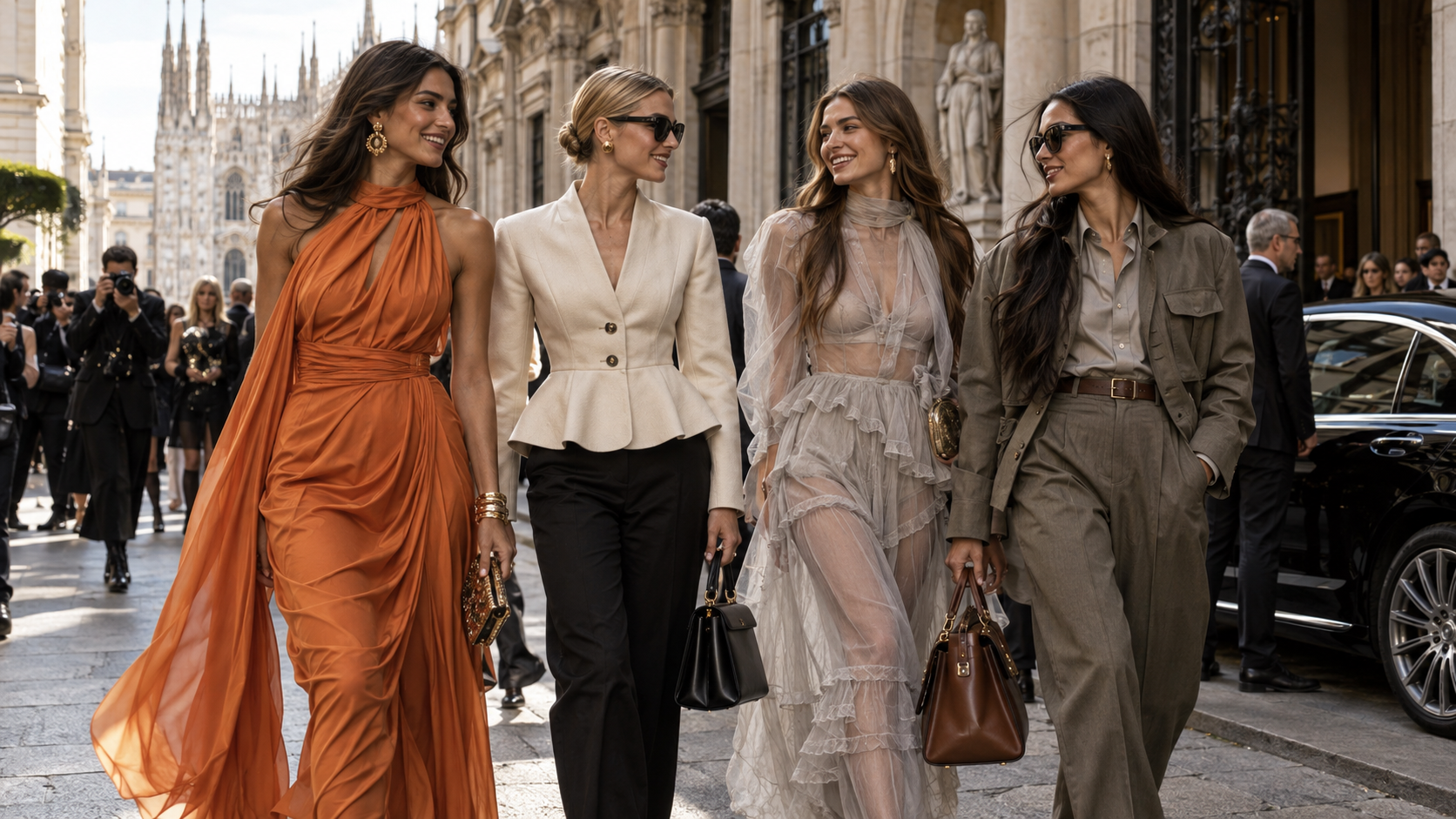
Spring 2027 is beginning to look less controlled than the quiet-luxury years that came before it. Romance is getting stranger. Color is becoming louder. Draping, transparency, utility details and exaggerated waistlines are all starting to circle the conversation.
So, before the first model steps onto a Milan runway, here’s what matters at Milan Fashion Week 2026—the designers, the transitions, and the trends worth watching rather than pretending have already happened.
Milan Fashion Week Runs September 22–28
First, the practical part.
The Spring/Summer 2027 edition of Milan Fashion Week takes place from Tuesday, September 22 through Monday, September 28.
The official Camera Moda calendar includes runway shows, presentations, appointments and events spread throughout the city. Prada appears on the opening day at 2 p.m., while the week continues through a dense mix of major houses and smaller labels before concluding on Monday. (Milano Fashion Week)
Vogue reports that this edition includes 54 physical shows and six digital shows, matching the scale of the previous season. (Vogue)
That is a lot of fashion in seven days.
It also means trend declarations made after the first afternoon should probably be treated with some skepticism.
Milan needs time.
Prada Opens the Week With Expectations Already High
Prada showing on the opening day immediately gives Tuesday weight.
Miuccia Prada and Raf Simons have spent recent seasons making clothing that often becomes more influential several months after the runway rather than immediately obvious in the room.
That is part of the fun.
A skirt that initially looks awkward becomes unavoidable.
A strange shoe appears everywhere.
A deliberately ordinary cardigan suddenly begins influencing half the industry.
For Spring 2027, Prada arrives at a moment when fashion appears increasingly interested in personality over polish.
That could suit the house particularly well.
If the broader season continues moving away from highly sanitized minimalism, Prada’s habit of making the slightly uncomfortable look desirable may feel unusually relevant.
Watch the styling as closely as the individual pieces.
With Prada, the combination is often the trend.
Gucci Is Entering the Second Chapter of Demna
Few Milan shows will be watched more closely than Gucci.
Demna’s Spring 2027 presentation on Friday, September 25, will be his sophomore ready-to-wear outing for the house following his major runway launch earlier in 2026. Vogue identifies Gucci as one of the season’s key second collections to watch. (Vogue)
Second collections can be more revealing than debuts.
The first show announces an idea.
The second has to prove it can become a language.
Gucci is particularly interesting because it carries enormous visual history: horsebit loafers, Jackie bags, bamboo handles, glamour, tailoring, leather goods and decades of very different interpretations of Italian luxury.
The question is no longer simply, “What will Demna do at Gucci?”
It is:
Which parts of his Gucci are becoming permanent?
Watch the bags.
Watch the proportions.
Watch whether the softer, less precious treatment of luxury that appeared earlier continues.
And watch how much archive remains visible once the introduction phase is over.
Maria Grazia Chiuri’s Fendi Is Still Taking Shape
Fendi has its own evolving story.
Maria Grazia Chiuri will present her second collection for the Roman house on Wednesday, September 23. (Vogue)
That is especially interesting because Fendi is a house where accessories, craftsmanship and ready-to-wear have to coexist convincingly.
You can’t discuss Fendi without discussing the Baguette.
Or fur traditions.
Or Roman identity.
Or leatherwork.
Chiuri’s first outing established the beginning of a new era, but Spring 2027 provides a better opportunity to understand how she intends to build a complete wardrobe around those codes.
Will the Baguette continue evolving through texture and embellishment?
Will ready-to-wear become softer?
More historical?
More Roman?
This is not a debut anymore.
Now the direction needs to become clearer.
Marni Under Meryll Rogge Deserves More Attention
Marni has always been at its best when it feels slightly off-center.
Color that shouldn’t work together.
Prints colliding.
Odd proportions.
Clothing that looks personal rather than perfectly optimized.
Meryll Rogge’s second Marni collection arrives on Thursday, September 24, according to Vogue’s schedule preview. (Vogue)
And strangely, the wider Spring 2027 mood may be moving closer to Marni territory.
Vogue’s seasonal trend forecast predicts a move away from the tightly controlled “clean girl” aesthetic toward more expressive, mismatched styling—clashing colors, prints and a more DIY attitude. (Vogue)
That does not guarantee Marni will do any of those things.
But it does mean the cultural environment feels unusually hospitable to a house built around individuality.
If Milan becomes less polished this season, Marni could look less eccentric than prophetic.
Moschino Has the Week’s Major Debut
This is the new beginning to watch.
Sunnei founders Loris Messina and Simone Rizzo will present their first collection as co-creative directors of Moschino on Friday, September 25.
They took over following Adrian Appiolaza’s departure, making theirs the only major creative-director debut highlighted on the Spring 2027 Milan calendar. (Vogue)
Moschino needs designers who understand humor without reducing the brand to a joke.
That balance is difficult.
The house has a history of visual wit, irony, logos, surrealism and fashion that understands exactly how ridiculous fashion can occasionally be.
Messina and Rizzo come from a very different but equally playful environment at Sunnei.
So the question is not whether the first show will be entertaining.
It probably will be.
The more important question is whether they can turn that energy into desirable clothes, bags and accessories that feel like Moschino rather than a temporary experiment.
Bottega Veneta, Ferragamo and Dolce & Gabbana Make Saturday Heavy
Saturday will require attention.
Vogue lists Dolce & Gabbana, Bottega Veneta and Ferragamo among the major houses occupying the September 26 schedule. (Vogue)
These brands represent very different versions of Italian fashion.
Dolce & Gabbana tends toward theatrical sensuality and visible craftsmanship.
Bottega Veneta has built enormous influence through leather goods, proportion and quiet but highly deliberate design.
Ferragamo continues working through a more modern interpretation of an old Italian luxury house.
Together, they make Saturday a useful test of where Milan’s idea of luxury is moving.
Will bags become softer?
Will tailoring remain oversized?
Does sensuality continue getting more transparent?
How important will leather texture become?
This is the day where broader commercial trends may become easier to identify.
Giorgio Armani Returns Under Silvana Armani
Sunday carries another important transition.
Giorgio Armani will show under the creative direction of Silvana Armani, with Vogue noting the house’s return to the schedule under her leadership. (Vogue)
Few brands are more connected to Milan’s fashion identity.
Armani changed modern tailoring by softening it.
Removing stiffness.
Letting jackets move around the body rather than controlling it.
That legacy makes the house particularly relevant at a time when fashion is again reconsidering the relationship between tailoring and ease.
The challenge with heritage houses is always similar.
Respect too much history and the clothes become frozen.
Ignore too much of it and the name loses meaning.
How Silvana Armani negotiates that balance will be one of the quieter but more important stories of the week.
Versace Will Be Missing—For Now
One major name will not be on the September runway schedule.
Versace is absent for the second consecutive season.
Vogue reports that Pieter Mulier’s debut for Versace is scheduled for February 2027, meaning Milan will have to wait a little longer for one of the industry’s most anticipated new creative chapters. (Vogue)
That absence matters because Versace usually provides Milan with one of its most unapologetically glamorous moments.
Without it, other houses may occupy more of that visual territory.
Or perhaps Milan will feel slightly less obsessed with obvious sex appeal this time.
Either way, the empty space is noticeable.
Vogue World Opens Fashion Week With a Bigger Cultural Message
Milan is not beginning quietly.
Vogue World: Milano takes place on September 22, the opening day of fashion week, bringing the event to the city after previous editions elsewhere.
According to Vogue, this edition will focus on artisanship and the importance of human craft in an increasingly technological world. (Vogue)
That theme feels particularly appropriate for Milan.
Italian fashion’s global reputation has always relied heavily on making.
Leather.
Tailoring.
Shoemaking.
Embroidery.
Textiles.
Objects where the hand of the maker still matters.
As artificial intelligence, digital production and automation continue changing creative industries, Milan’s response may be to make craftsmanship more visible rather than less.
Expect that conversation to extend beyond one event.
Trend to Watch: Fashion Is Getting Messier Again
Now to the trends—but with one important distinction.
These are Spring 2027 directions to watch in Milan, not confirmed Milan Fashion Week trends. The shows have not happened yet.
One of the strongest early signals is the rejection of hyper-controlled styling.
Vogue describes a potential “Messy Girl Summer” built around clashing prints, colors and more personal, DIY-feeling combinations. (Vogue)
Milan traditionally excels at polished fashion.
That makes its response especially interesting.
Will Italian houses resist the mess?
Or refine it?
A mismatched scarf at Prada.
Unexpected accessories at Gucci.
Pattern combinations at Marni.
The Milan version of disorder probably won’t look accidental.
It will look expensive enough to make you wonder how difficult it was to achieve.
Trend to Watch: Draping and the Modern Goddess
Another strong Spring 2027 forecast is the return of softer, more draped silhouettes.
Vogue’s seasonal predictions identify a “Modern Goddess” mood involving wrapped fabrics, flowing materials, asymmetry and fluid lines. (Vogue)
Milan is particularly well equipped for this.
Italian fashion has a long relationship with clothes that understand the body without necessarily squeezing it.
Look for:
Liquid dresses.
One-shoulder shapes.
Wrapped jersey.
Twisted fabric.
Longer silhouettes that move rather than stand rigidly.
If this direction appears across several houses, it could become one of Spring 2027’s most wearable ideas.
Trend to Watch: Sheer Romance
Transparency is not new.
But the way designers are using it continues to evolve.
Vogue expects sheer romantic dressing, delicate fabrics and more whimsical silhouettes to remain important into Spring/Summer 2027. (Vogue)
Milan could push that in several directions.
Sheer knits.
Transparent skirts.
Delicate dresses beneath sharp jackets.
Lingerie references.
Fine layers over more substantial tailoring.
The most interesting versions will probably avoid looking overtly “naked.”
Instead, transparency becomes another texture.
Something that interrupts an otherwise serious outfit.
Trend to Watch: Orange
Every fashion season apparently requires one color everyone suddenly agrees they always loved.
Spring 2027 may belong to orange.
Vogue identifies orange as one of the strongest color predictions for the season. (Vogue)
Milan should be a useful test.
A single orange dress proves nothing.
Orange appearing at Prada, Ferragamo, Marni and several smaller houses?
Then we have a trend.
Watch for tangerine, burnt orange, coral and almost-red variations rather than assuming one exact shade will dominate.
And if the full look feels intimidating, accessories may do the work first.
A bag has launched many color trends before.
Trend to Watch: The Peplum Returns Again
Fashion never throws anything away permanently.
It puts it in storage.
The peplum is returning to Spring 2027 forecasting, but the new version is less about the familiar fitted top with a polite waist ruffle and more about exaggerated construction. (Vogue)
Sculpted hips.
Flared jackets.
Corseted waists.
Volume extending outward from tailoring.
Milan’s pattern-cutting tradition makes this especially interesting.
If Italian houses embrace the idea, expect it to look architectural rather than nostalgic.
That could make the peplum surprisingly appealing to people who swore they would never wear one again.
Trend to Watch: Utility Gets More Luxurious
Vogue also identifies a “gardening-core” movement built around utility clothing, raffia, aprons, cargos and practical details. (Vogue)
The name is playful.
The underlying idea is more useful.
Consumers appear increasingly interested in clothes that do something.
Pockets.
Adjustable closures.
Protective layers.
Practical bags.
Natural materials.
Milan’s likely contribution will be translating utility into luxury.
Cargo shapes in beautiful fabric.
Raffia combined with leather.
Work jackets cut with precision.
Practicality, but preferably with excellent shoes.
What Will Actually Define Milan?
Probably not one trend.
Milan is entering Spring 2027 in the middle of several creative transitions.
Gucci is still defining itself under Demna.
Fendi is evolving under Maria Grazia Chiuri.
Marni is developing its new identity under Meryll Rogge.
Moschino begins again.
Armani moves forward under Silvana Armani.
Meanwhile, Prada and Bottega Veneta remain powerful enough to influence the season simply by making one strange object feel suddenly necessary.
That makes Milan Fashion Week 2026 less about predicting the winning skirt length and more about watching houses decide what they want to become.
There will be orange.
Perhaps peplums.
Almost certainly sheer fabric somewhere.
But the more important story may be whether Milan continues loosening luxury itself.
Less perfect.
More tactile.
More personal.
More interested in craft at a moment when the rest of the world is becoming increasingly automated.
The schedule starts September 22.
After that, we’ll know which predictions survived contact with the runway.
And which strange Milanese idea we’ll all be wearing next spring without remembering exactly when it started.
