
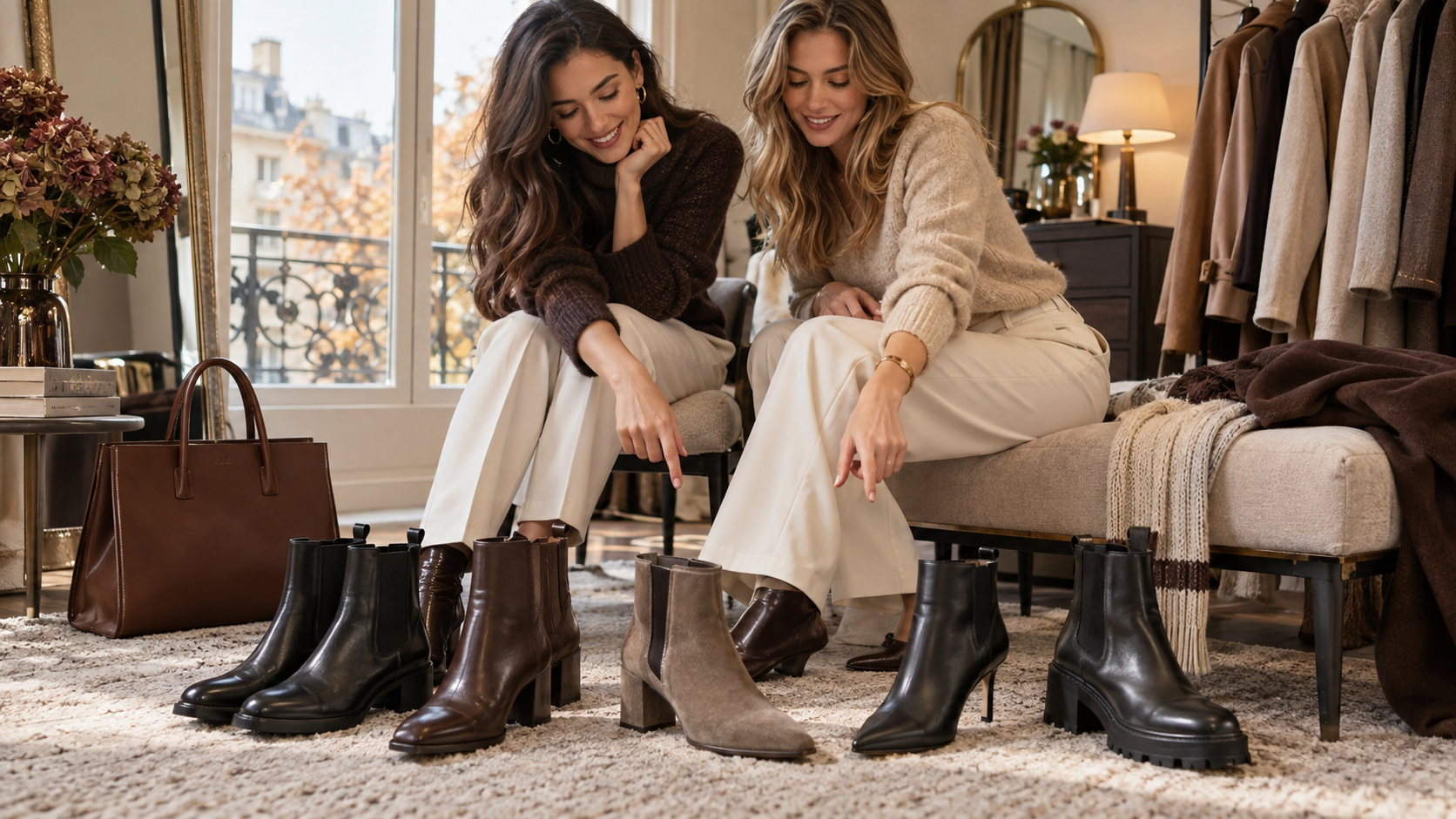

Ankle boots are one of those wardrobe pieces that seem simple until you try to buy a pair.
Too stiff, and they sit untouched in the closet. Too soft, and they lose their shape after one season. Too high, and they’re useless for walking. Too flat, and they may somehow still manage to hurt.
Then there’s the question of style.
Do you want a Chelsea boot? A pointed toe? A block heel? Something chunky? Something sleek enough for work but comfortable enough for a full day out?
The best ankle boots for women are usually the ones that solve several problems at once. They look polished, feel secure, work with different outfits and don’t require a complicated break-in period before becoming wearable.
That sounds obvious.
In practice, it’s surprisingly rare.
A good ankle boot should disappear into your wardrobe rather than forcing you to plan around it. It should work with jeans, trousers, skirts and dresses. It should feel appropriate in autumn and still useful through winter. And ideally, it should be the pair you reach for when you don’t want to think too hard.
Here’s what to look for, which styles are worth considering, and how to choose ankle boots you’ll actually wear.
Start With Comfort, Not Heel Height
People often begin with appearance.
That’s understandable. Boots are visible.
But comfort starts deeper inside the shoe.
The footbed matters. So does the shape of the toe box, the flexibility of the sole and how securely the heel sits inside the boot.
A low heel doesn’t automatically mean comfort.
Some flat boots have little cushioning and a very hard sole, which can become tiring after several hours. Meanwhile, a well-designed two-inch block heel may feel more comfortable because it distributes weight properly and gives the foot more support.
The best way to judge a boot is simple.
Walk in it.
Not three steps across carpet.
Walk around for several minutes. Go up a step if you can. Pay attention to the heel, toes and ball of the foot.
If something feels wrong immediately, don’t assume the boot will suddenly become perfect later.
Leather softens.
Bad proportions usually don’t.
Best Everyday Pick: The Classic Chelsea Boot
Chelsea boots may be the most useful ankle boots ever designed.
They slip on easily, usually have a low heel and work with almost everything.
A sleek black leather pair can handle work trousers, straight jeans and midi skirts. Dark brown feels softer and works beautifully with cream, olive, camel and blue denim.
The elastic side panels make Chelsea boots especially practical for everyday wear because they move with the foot more naturally than rigid zip-up styles.
The key is choosing the right shape.
A very rounded Chelsea boot can look casual and slightly outdoorsy.
An almond or softly squared toe feels more polished.
For maximum versatility, look for a medium-profile sole rather than an extreme lug sole.
Chunky enough to feel current.
Not so chunky that the boot suddenly becomes the entire outfit.
Best for Work: A Sleek Leather Ankle Boot
Office ankle boots should be simple.
Think clean leather, a narrow or almond toe, minimal hardware and a manageable heel.
Black is the obvious choice because it works under tailored trousers and with dark skirts. But chocolate brown, espresso and deep burgundy can look even more sophisticated, particularly with navy, charcoal and beige.
A heel around 1.5 to 2.5 inches often strikes the right balance between polish and comfort.
Block heels are usually easier for long days than stilettos.
If you commute on foot, pay attention to the sole.
A smooth leather sole may look elegant but can be slippery on wet pavements. A discreet rubber outsole gives you better grip without ruining the refined appearance.
Work shoes need to survive more than carpet.
Best for Walking: Cushioned Low-Heel Boots
If you’re covering several kilometers a day, fashion needs to cooperate.
Look for a low heel, padded footbed and enough room across the front of the shoe.
Rubber soles are useful because they absorb more impact and provide traction on uneven pavements.
A slightly rounded or almond toe usually works better than a sharply pointed shape.
And watch the shaft.
If the top edge of the boot repeatedly rubs your ankle while walking, the problem gets much worse over time.
Try the boots with the socks you’ll actually wear.
A perfect fit with thin hosiery may become too tight with winter socks.
This matters more than people think.
Best With Dresses: Slim Ankle Boots
Ankle boots and dresses can look either incredibly elegant or slightly awkward.
The difference is often the shaft.
A slim shaft that fits relatively close to the ankle creates a cleaner line, especially with midi dresses and skirts.
Pointed or almond toes work particularly well here.
A small heel adds shape without making the outfit feel overly formal.
Black boots are useful, but brown suede can soften a floral or printed dress beautifully.
The general rule is simple:
The heavier the boot, the heavier the clothing around it should feel.
A delicate slip dress with a massive combat boot can work, but it’s a deliberate contrast.
A sleek dress with a slim ankle boot is easier.
Best Chunky Pick: Lug-Sole Boots
Chunky boots aren’t disappearing anytime soon because they’re practical as well as fashionable.
A lug sole gives you grip, extra height and a more substantial silhouette.
They work particularly well with straight-leg jeans, wide-leg trousers and heavier fall coats.
The problem is weight.
Some chunky boots feel like you’re carrying two small bricks.
Pick them up before buying.
If they already feel heavy in your hand, you’ll notice that weight after several hours of walking.
Look for lightweight rubber soles and a flexible upper.
You want visual weight.
Not actual punishment.
Best Suede Ankle Boots
Suede instantly changes the mood of an ankle boot.
Leather feels sharper.
Suede feels softer.
A taupe or chocolate suede boot looks especially good with denim, wool trousers and knit dresses.
It also adds texture to neutral outfits.
Imagine cream jeans, an oatmeal sweater and dark brown suede boots.
Nothing complicated, but the textures make the outfit feel richer.
The downside is maintenance.
Suede and heavy rain are not friends.
Use a protective spray and keep a suede brush at home.
If you live somewhere with constant wet weather, smooth leather is simply easier.
Best Pointed-Toe Boots
Pointed boots have a slightly unfair reputation for being uncomfortable.
Some are.
But the problem usually isn’t the point itself.
It’s how quickly the toe box narrows.
A well-designed pointed boot gives the toes room before tapering farther forward.
That creates the elegant shape without forcing your foot into the actual point.
Pointed ankle boots look especially good with tailored trousers and straight jeans because they visually lengthen the leg.
They also work well with evening outfits.
Choose a modest heel and smooth leather if you want something versatile.
Very sharp toes and very high heels are beautiful in theory.
Less beautiful after dinner when you’re wondering whether removing your shoes under the table is socially acceptable.
Best Block-Heel Boots
Block heels are the compromise many women actually need.
They give you height without creating the instability of a narrow heel.
A two-inch block heel works particularly well for office wear and dinners.
A slightly higher three-inch heel can still be comfortable if the front of the boot is well cushioned.
The shape matters too.
Straight block heels feel modern.
Slightly flared heels can look more fashion-forward.
Wood-effect or stacked heels feel casual and work nicely with suede.
If you’re buying only one heeled ankle boot, I’d choose a simple block heel in black or deep brown.
It’s much easier to wear repeatedly.
Best Waterproof Boots
Rain changes everything.
Waterproof ankle boots are useful for commuters, travel and anyone living somewhere with unpredictable weather.
Look for treated leather, sealed seams and a rubber sole.
Some boots use waterproof membranes inside, which can improve protection considerably.
The trade-off is breathability.
A heavily waterproofed boot may feel warm indoors.
So if you’re mostly dealing with occasional rain rather than serious winter weather, water-resistant leather may be enough.
The important thing is understanding the difference.
“Water-resistant” means the boot can handle some moisture.
“Waterproof” should offer more substantial protection.
Marketing sometimes blurs the line.
Your socks will eventually tell you the truth.
Best Western-Inspired Ankle Boots
Western boots don’t have to look like cowboy boots.
A slightly angled heel, subtle stitching and an almond or pointed toe can introduce the idea without turning the outfit into a theme.
These boots work particularly well with denim.
Straight jeans tucked slightly over the shaft look effortless, while a midi skirt creates more contrast.
Brown leather is the obvious choice here.
Black makes the look sharper.
Cream can look stylish but is much less forgiving in real life.
Western-inspired ankle boots are a good second pair.
For a first pair, I’d still go more classic.
Best Minimalist Ankle Boots
Minimal boots are about proportion.
No extra buckles.
No large zippers.
No visible branding.
Just good leather and a strong shape.
These look especially good in black, dark brown or taupe.
A close-fitting shaft and clean almond toe create a boot that works with almost anything.
Minimalist styles also age well.
You might not notice them immediately in a photograph.
That’s part of the appeal.
They don’t date as quickly.
If you’re building a smaller wardrobe, this is usually the smartest direction.
Leather or Vegan Leather?
Good leather softens with wear and tends to age better.
It also responds well to conditioning and can often be repaired or polished.
Vegan leather varies enormously.
Some synthetic versions look excellent initially but can crack or peel over time. Others are much better made.
If you’re choosing synthetic materials, inspect the surface closely.
Does it flex naturally?
Does it feel plasticky?
How are the seams finished?
Material quality matters regardless of whether it’s leather or not.
Don’t assume expensive means durable.
And don’t assume inexpensive means disposable.
Construction matters just as much.
Black, Brown or Burgundy?
If you wear mostly black, gray and navy, buy black.
Easy.
If your wardrobe leans cream, beige, camel, olive and denim, brown may be more versatile.
Dark chocolate is especially useful because it behaves almost like black while feeling warmer.
Burgundy deserves more attention.
It works with black, charcoal, navy, cream and denim and adds interest without becoming difficult to style.
If you own black boots already, burgundy is a strong second pair.
Tan is casual and works well for lighter wardrobes, but it can feel less polished in winter.
How High Should Ankle Boots Sit?
This matters more than people expect.
A very low boot that finishes below the ankle bone can look delicate but may feel less secure.
A mid-height shaft is the most versatile.
A higher shaft can look elegant under cropped trousers or long skirts, but it may interfere with certain jeans.
If you often wear straight-leg or cropped trousers, try them on with the boots.
The trouser hem and boot shaft should either overlap cleanly or leave a deliberate gap.
An awkward half-inch collision looks accidental.
How Should Ankle Boots Fit?
Your heel should feel secure.
Your toes should have room.
The widest part of your foot should line up naturally with the widest part of the shoe.
And the ankle opening shouldn’t dig into your leg.
Try them later in the day if possible.
Feet swell slightly as the day goes on.
This gives you a more realistic idea of how the boots will feel after hours of wear.
Also walk on hard flooring if the store allows it.
Carpet is very forgiving.
City pavements are not.
How to Style Ankle Boots With Jeans
Straight-leg jeans are probably the easiest pairing.
Let the jeans fall over the top of the boot or end just above it.
Skinny jeans can be tucked into slim boots, though the overall look feels more fitted.
Wide-leg jeans work well with pointed or heeled ankle boots because the toe remains visible beneath the hem.
With cropped jeans, make the gap between jeans and boot intentional.
A little ankle can look elegant.
A random strip of sock?
Less so.
How to Style Ankle Boots With Skirts and Dresses
Midi skirts work beautifully with ankle boots.
For a cleaner line, choose boots close to the color of your tights or skirt.
Black skirt + black boots.
Brown dress + chocolate boots.
This visually lengthens the lower half of the body.
For lighter dresses, suede boots soften the contrast.
And if you’re wearing a mini skirt, a chunkier ankle boot can balance the shorter hem.
Proportion matters more than rules.
What to Avoid When Buying Ankle Boots
Don’t buy boots that already hurt.
Don’t assume thick soles equal comfort.
Don’t choose a heel height you never actually wear.
And don’t buy a highly specific trend style if you need the boot to work every day.
Also check the zipper.
Cheap zippers are one of the first things to fail on ankle boots.
Run it up and down several times.
It should feel smooth and secure.
Finally, look at the sole attachment.
If the sole already appears poorly glued or uneven in the store, that’s not an encouraging sign.
The Best Pair Is Usually the Simplest One
There are plenty of ankle boots worth experimenting with.
Chunky soles.
Western details.
Suede.
Pointed toes.
Sculptural heels.
But if you’re buying your first pair, keep it simple.
Choose black or dark brown leather.
A low or medium block heel.
An almond or softly pointed toe.
A clean shaft that works under trousers.
That one pair can handle work, dinners, weekends and travel.
Then, once you know what you actually wear, add something more specific.
The best ankle boots for women aren’t the ones that look most impressive in the box.
They’re the ones that become part of your routine.
You put them on without thinking.
You walk farther than planned.
You wear them again tomorrow.
That’s usually when you know you found the right pair.
